
Fresh Nursery (part 3): Safety That Builds Trust in Your Nursery


If you want to know how a parent experiences your nursery, here’s a simple truth:
They decide whether they trust you long before they hand you their child.
They’re watching the room.
The volunteers.
The cleanliness.
The check-in.
The way you handle a crying baby.
The way you speak to them when they’re nervous.
Safety isn’t just a policy -it’s the language of trust.
And nursery is the first place that trust is tested.
I know “safety training” isn’t the most exciting part of kids ministry. But if you get safety wrong in nursery, nothing else matters. Parents won’t relax. Families won’t return. Volunteers won’t feel confident. And ministry becomes one crisis away from collapse.
So let me highlight the safety practices that matter most -not as a legal checklist, but as a pastoral priority. Because these parents aren’t just trusting you with their baby. In many ways, they’re trusting you with their faith journey in this season.
1) Two adults. Always.
I’m going to say this as clearly as I can:
Never be alone with a child. Even an infant.
Don’t accept children into the nursery until two approved volunteers are present. It protects the child. It protects the volunteer. It protects the church. And it communicates professionalism to parents who are already anxious.
2) Know your boundaries for who serves
Every church has policies, and you should follow yours. But I’ve learned to be very clear in nursery about roles and boundaries.
If you allow teens to serve, make sure they’re mature enough to handle fragile little ones.
If you allow men to serve (I do), define what roles are appropriate for your setting.
If you have older adults serving, make sure they’re physically able to hold and care for babies safely.
The goal isn’t to restrict people—it’s to protect everyone.
And one small detail that helps: volunteer identification. A name tag or identifier that says, “This person is approved to be here.” Parents notice that.
3) Ratios matter more than you want them to
I’ve tried different ratios over the years. Here’s where I’ve landed after a lot of real-life nursery chaos:
For infants and toddlers, 2 adults to 5 children is the maximum.
When the whole room cries at once, when diaper changes start stacking up, when pick-up begins and parents flood in, you’ll be thankful you didn’t push beyond that.
If you can keep it lower, great. But if you’re wondering where the hard line should be: 2:5. When you hit it, you stop accepting kids unless a parent stays in the room.
4) Clean floors and “soft feet”
This one surprises people, but it has made a real difference everywhere I’ve implemented it:
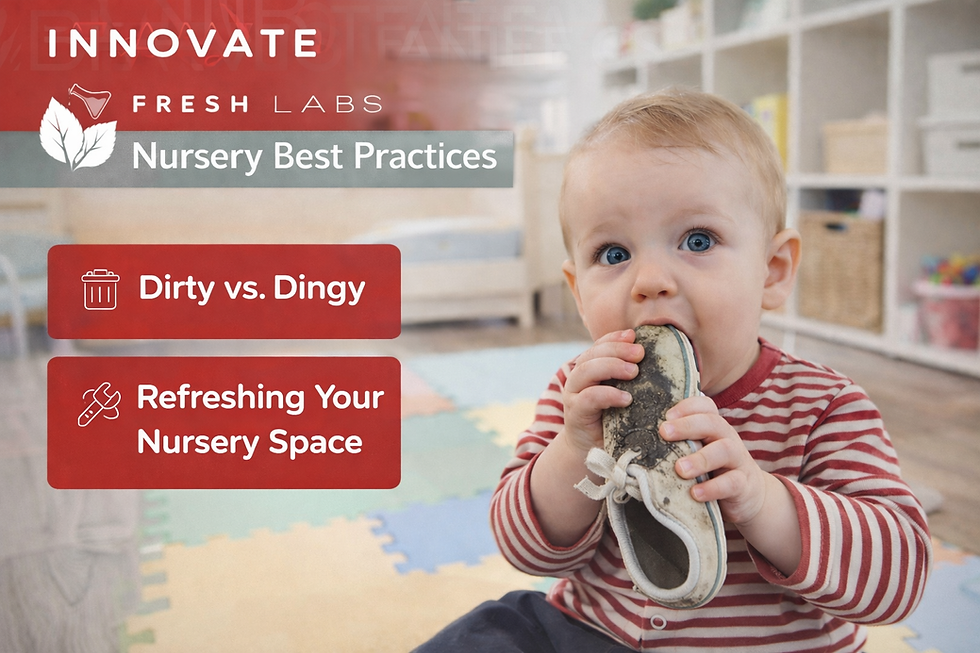
No adult shoes in the nursery.
It’s sanitation. It’s also safety. Shoes track in everything from the parking lot and they’re not gentle when a crawler’s fingers are on the ground.
Have extra socks or simple booties available. And if someone pushes back, remember: nursery is not about adult convenience. It’s about caring for the most vulnerable people in the building.
5) Healthy child policy (and no medication)
Nursery is where illness spreads fastest.
Respect your well-child policy and communicate it clearly.
And unless your church has very specific medical policies and trained staff, here’s a wise boundary: Don’t administer medication.
Even over-the-counter. No ointment for diaper rash. No “just this once.” If a child needs something, call the parent.
Parents usually appreciate this. It shows you’re careful.
6) Diaper bags, bottles, and formula
Use what parents provide. Every child is different. Diapers fit differently. Some kids have allergies. Some have very specific formula or feeding needs.
A best practice I’ve followed: don’t mix or heat formula in the nursery unless your policy and setup support it clearly. If a situation requires special feeding, invite the parent to help. You’re not being unkind, you’re being wise.
7) Toys: age-appropriate, unbroken, and sanitized
Nursery toys need to be:
Age-appropriate (follow recommended ages)
Free of small choking hazards
Free of broken pieces
Cleaned consistently
One simple system: a “dirty toy bucket.” If it goes in a mouth, it goes in the bucket until it’s cleaned. And be careful with harsh chemicals, what cleans well for adults isn’t always safe for babies to chew on.
8) A diaper-changing policy is not optional
Diaper changing is one of the most high-risk routines in nursery -not because diapers are scary, but because inconsistency creates mistakes and misunderstandings.
Have a written policy. Train volunteers. Never turn your back. Keep it clean. And treat that moment with care.
Because safety isn’t just about avoiding problems, it’s about building a nursery where parents think:
“My child is safe here. And I can finally breathe.”
This series reflects the heart behind our Nursery Lab designed to help churches create safe, welcoming, spiritually intentional nursery ministries at any scale. If you’re looking to go deeper, those resources are available to support you along the way.
Comments